
FREE QUOTE CALL OR TEXT
0424 408 330
No Call Out Fee Conditions apply*
GET YOUR JOB BOOKED IN AND FINISHED TODAY !!
Concrete Cancer Repairs Service
Carpet Removal Sydney’s team is your trusted specialist in concrete cancer repairs. Our team provides Free Site Inspections and Quotes for concrete cancer repairs and concrete spalling repairs throughout Sydney. Our skilled team is committed to restoring the strength, safety, and appearance of your concrete structures, delivering durable, high-quality results you can rely on.
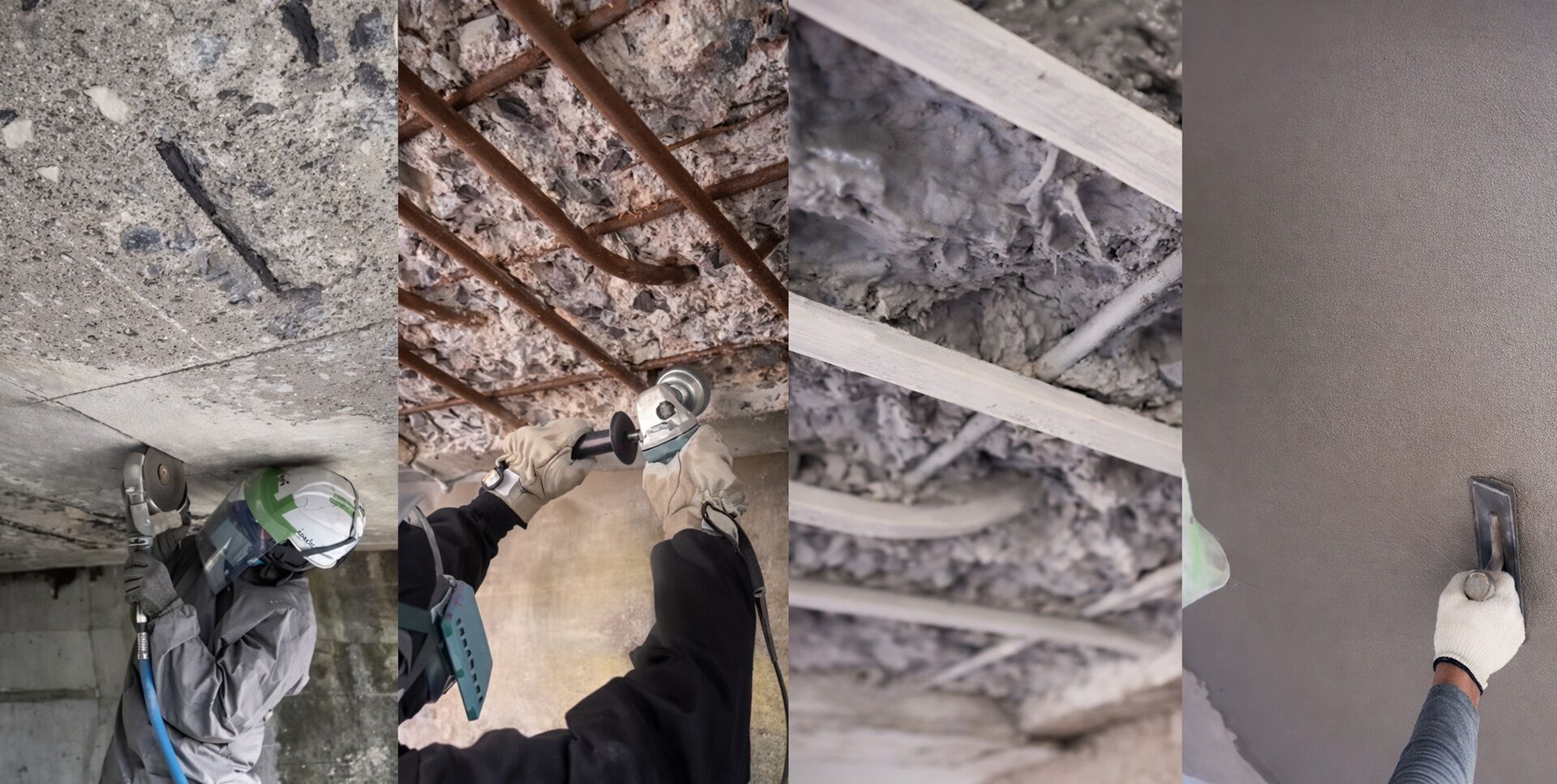
Our concrete cancer repair process is designed to permanently address reinforcement corrosion and restore structural integrity. Each stage is carried out using industry-approved methods and materials to ensure durability, safety, and long-term performance.
FREE QUOTE CALL OR TEXT 0424 408 330
Trusted by Builders, Strata Managers & Property Owners
GET YOUR JOB BOOKED IN AND FINISHED TODAY !!

Expert Concrete Cancer Repair Service In Sydney
Expert Concrete Cancer Repair Service In Sydney
Our Concrete Cancer Repair Process
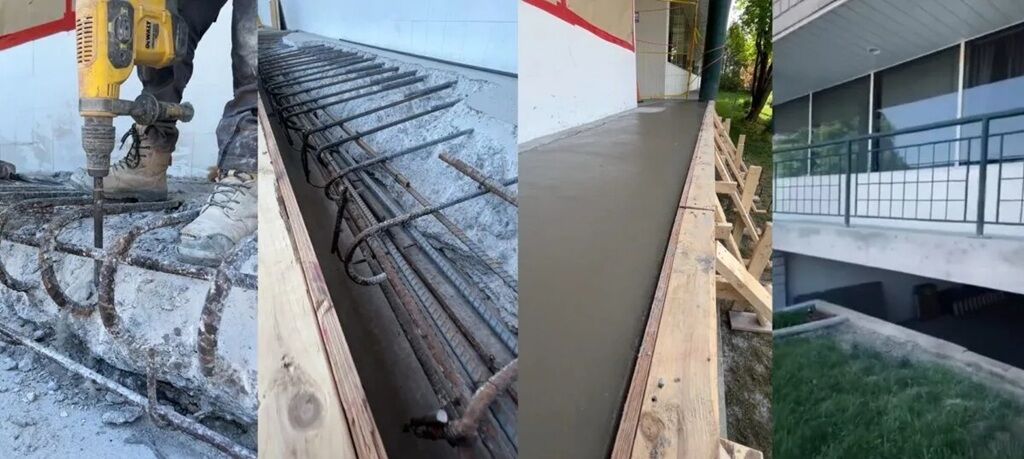
Our concrete cancer repair process is designed to permanently halt reinforcement corrosion and restore the structural integrity of affected concrete elements using industry-approved remediation methods.
Step 1: Free Site Inspection And Quote
We begin with a comprehensive on-site assessment and inspection to evaluate the extent of concrete damage, identify the cause of reinforcement corrosion, and determine the most appropriate repair approach. Based on this assessment, we provide a clear, obligation-free quote outlining the required works.
Step 2: Section Preparation
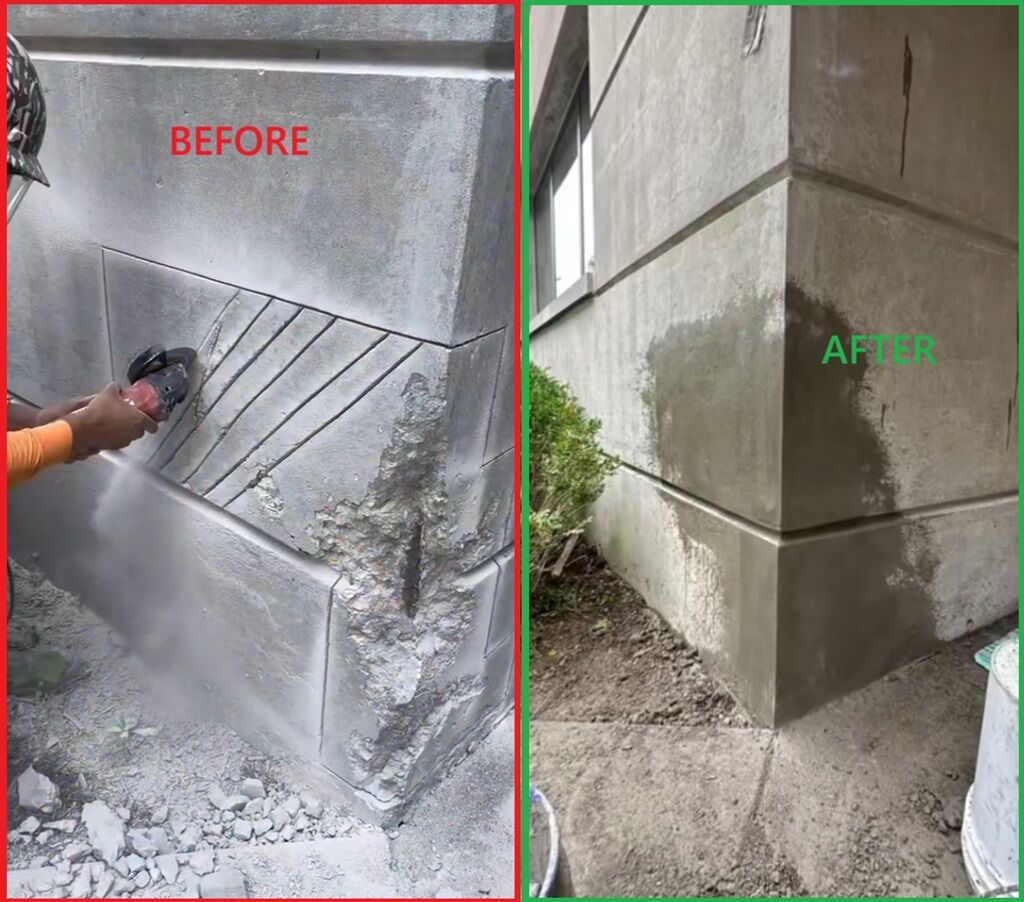
Damaged concrete areas are carefully cut and edged to create a clean surface for restoration.
Step 3: Dust-Free Concrete Removal
Specialised dust-reducing jackhammers are used to safely remove all weakened and loose concrete around the corroded steel.
Step 4: Rust Treatment
Exposed steel is treated using wire brushes or grinders to remove rust and prepare it for protective coatings.
Step 5: Cleaning Surfaces
All concrete and steel surfaces are meticulously cleaned to ensure primers and protective treatments adhere properly.
Step 6: Primer and Corrosion Protection
We apply high-grade epoxy primers and rust inhibitors, followed by a protective barrier to reduce the risk of future corrosion.
Step 7: Reinforcement Repair or Replacement
Where necessary, steel reinforcement bars are replaced or supplemented to restore structural integrity.
Step 8: Protective Coatings & Waterproofing
Protective coatings and waterproofing systems are applied to the repaired area where required to reduce moisture ingress and help prevent future corrosion.
Step 9: Concrete Restoration
New concrete is carefully applied at the correct thickness and allowed to cure, fully restoring the surface and strength of the structure.
Common Signs Of Concrete Cancer
Concrete cancer often develops internally before visible damage becomes severe. The following warning signs indicate corrosion of reinforcement steel and underlying concrete deterioration.
Rust Streaks & Discolouration:
Brown or reddish staining on concrete surfaces often signals corrosion occurring within embedded steel reinforcement.
Cracking in Concrete:
Hairline cracks or wider fissures may indicate internal expansion of rusting steel, which worsens over time if untreated.
Spalling, Flaking, or Crumbling Concrete:
Sections of concrete breaking away from the surface are a strong indicator of advanced concrete cancer.
Hollow or Drummy Areas:
Concrete that sounds hollow when tapped suggests delamination caused by corrosion beneath the surface.
Water Ingress, Damp Patches, or Pooling:
Persistent moisture accelerates corrosion and significantly increases deterioration risk.
Bubbling or Flaking Paint & Coatings:
Peeling finishes on balconies, soffits, or ceilings can reveal underlying concrete damage.
Faulty Expansion Joints:
Failed joints allow excessive movement and moisture penetration, contributing to cracking and spalling.
Thin Concrete Cover:
Reinforcement positioned too close to the surface is more vulnerable to corrosion.
Corroded Embedded Fixtures:
Rusting bolts, anchors, or fixings can initiate concrete degradation in surrounding areas.
Exposed Reinforcement Steel:
Visible steel indicates advanced concrete cancer requiring immediate professional repair.
When Professional Repairs Are Required
If one or more of these signs are present, early assessment and professional concrete cancer repairs can prevent extensive structural damage and reduce long-term repair costs.
What Is Concrete Cancer & Why It Matters
Concrete cancer, also known as concrete spalling, occurs when steel reinforcement within concrete begins to corrode. As the steel rusts, it expands, placing internal pressure on the surrounding concrete. This expansion causes cracking, delamination, and eventually the breaking away of concrete from the surface.
Concrete cancer most commonly affects balconies, slabs, columns, beams, car parks, and exposed structural elements—particularly in coastal and high-moisture environments such as Sydney and NSW.
Why Concrete Cancer Occurs
Concrete cancer develops when moisture, oxygen, and salts penetrate the concrete and reach the reinforcing steel. Common contributing factors include:
– Water ingress through cracks or failed waterproofing
– Carbonation of concrete over time
– Chloride exposure from coastal air or de-icing salts
– Poor original concrete coverage over reinforcement
– Age-related deterioration of the slab
Once corrosion begins, the damage progresses internally—even if surface cracking appears minor.
The Importance Of Proper Repairs
Effective concrete cancer repairs require more than surface patching. Damaged concrete must be fully removed, reinforcement steel treated and protected, and repairs reinstated using compatible materials. Correct remediation halts corrosion, restores structural performance, and extends the service life of the structure.
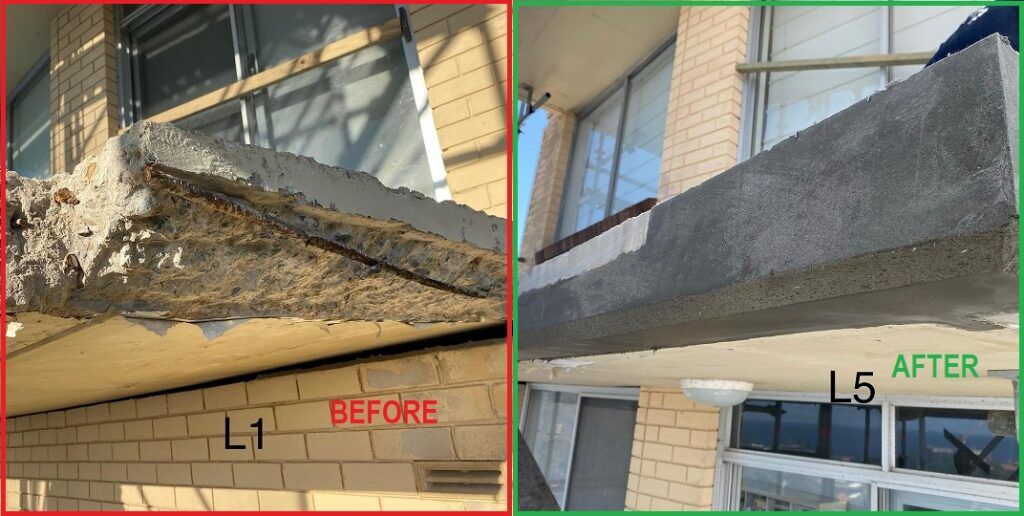
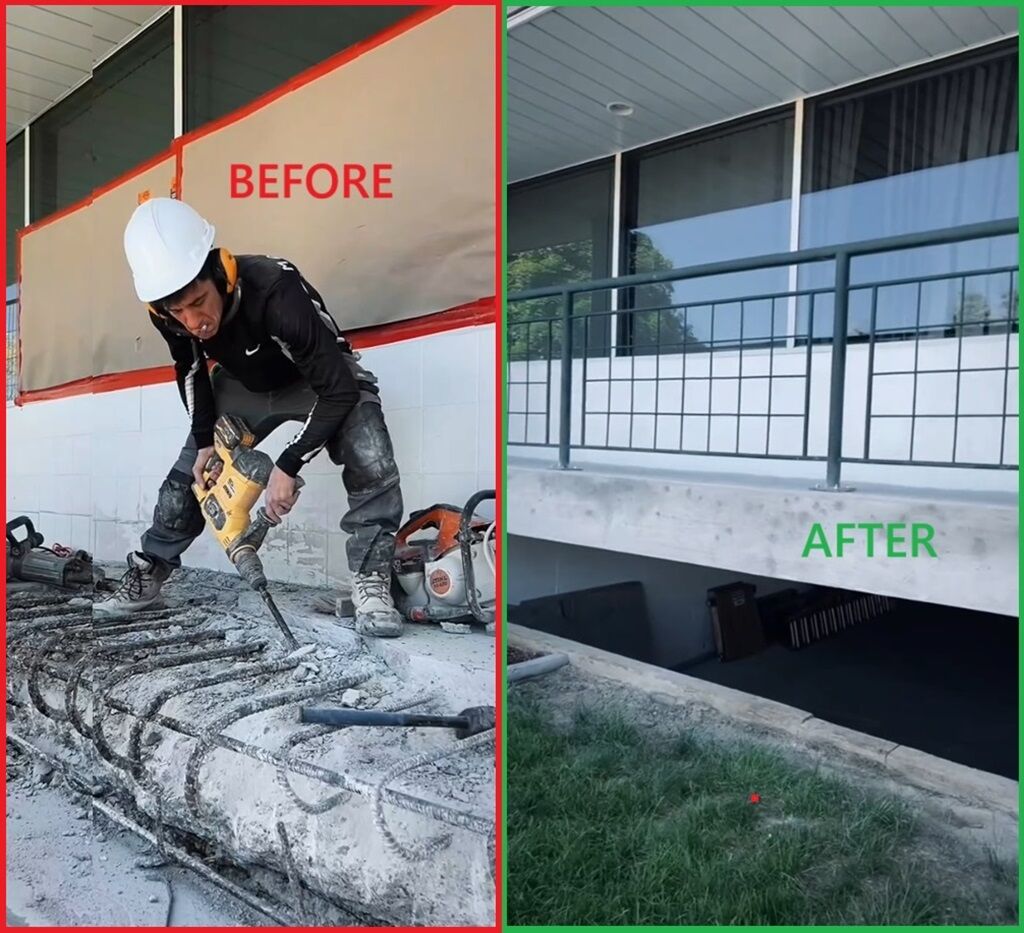
Concrete Cancer Repairs Results – Before & After
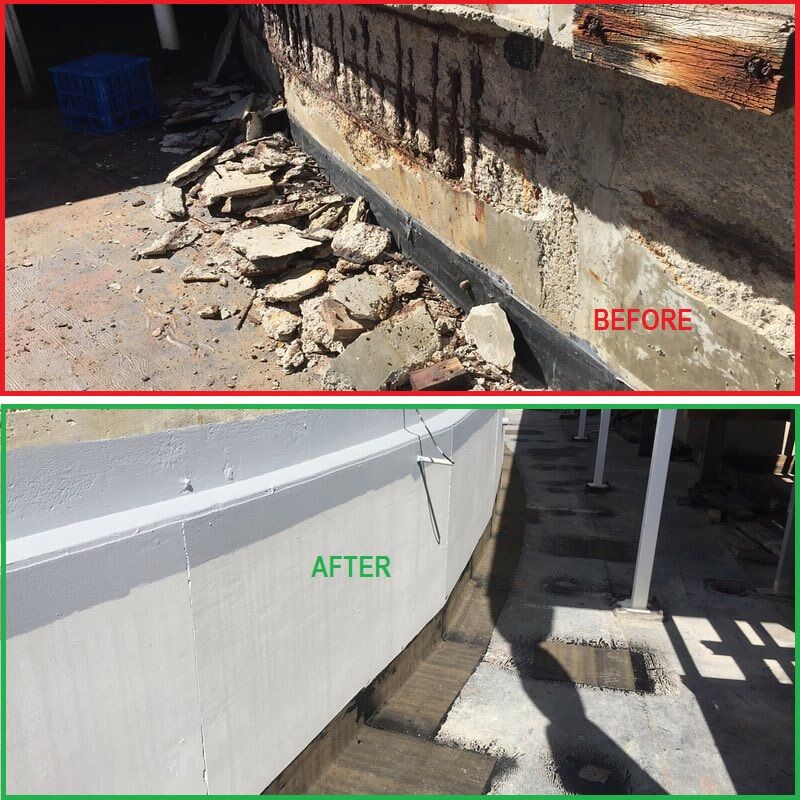
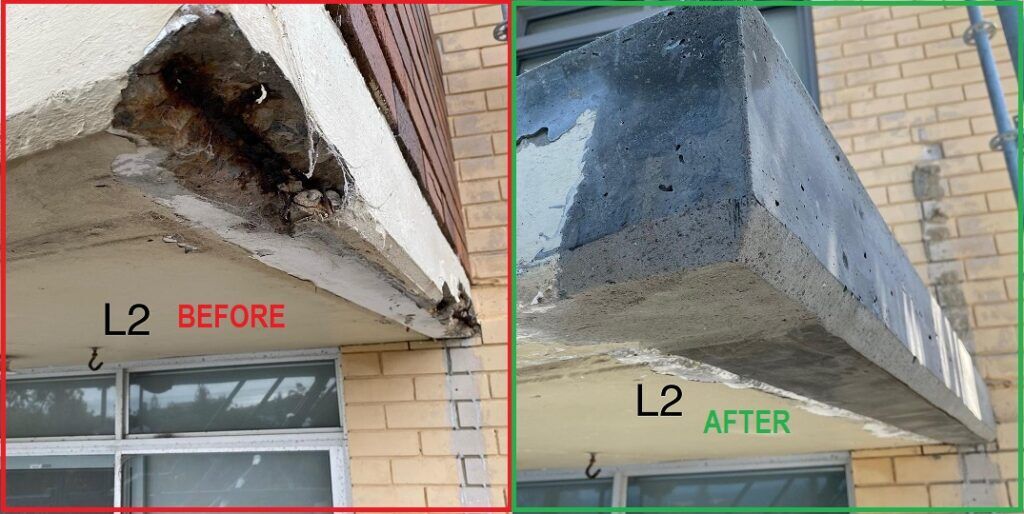
This before-and-after concrete cancer repair example shows deteriorated concrete professionally repaired through the removal of damaged material and treatment of affected reinforcement. The concrete is structurally reinstated to a sound, durable condition, ready for protective coatings, waterproofing and final finishes—demonstrating the effectiveness of professional concrete cancer repairs in restoring structural integrity and long-term performance.
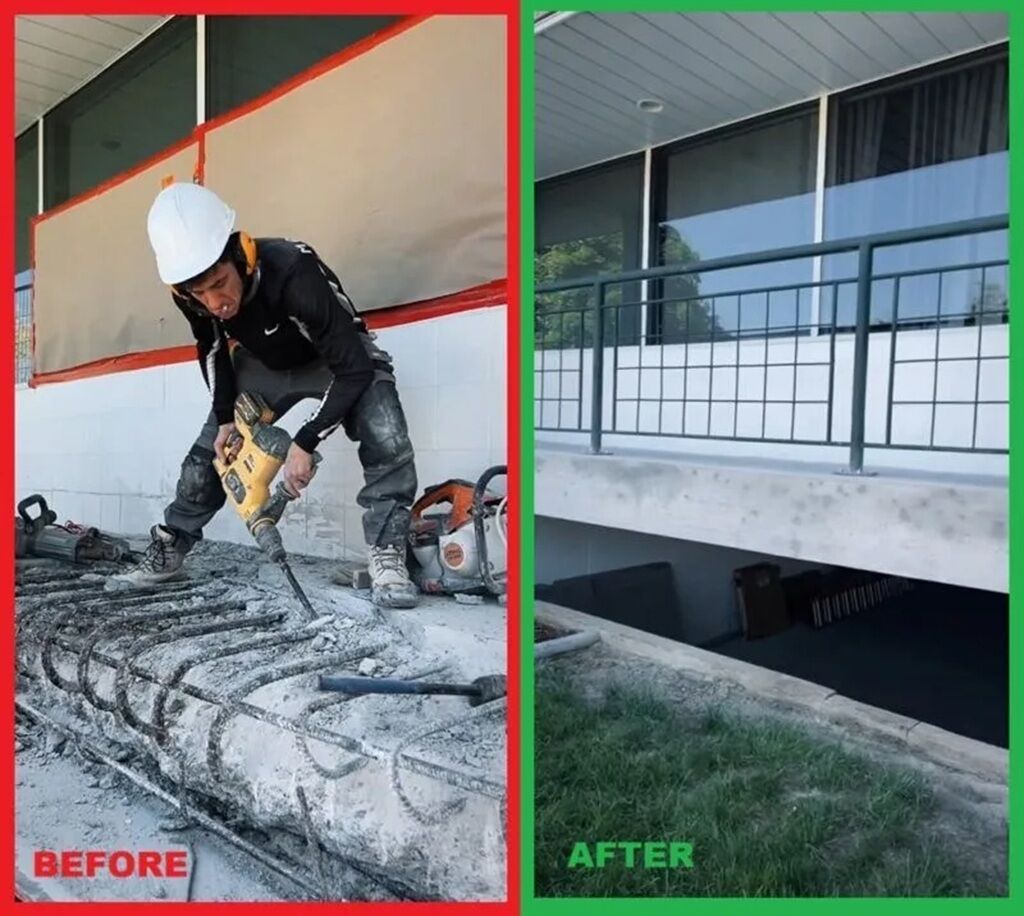
Key Factors That Increase The Risk Of Concrete Cancer
Several conditions can make concrete more susceptible to damage and reinforcement corrosion:
Magnesite Flooring:
Properties built from the 1920s through the 1990s often contain magnesite flooring. While it was a common choice at the time, this material can trap moisture and contribute to internal steel corrosion. Professional removal is recommended to avoid long-term structural issues.
Coastal Locations:
Buildings near the ocean face harsh conditions due to salt-laden air. Salt can penetrate concrete and accelerate the rusting of the steel reinforcement inside.
Water Penetration:
Cracks, unsealed joints, or gaps in the concrete allow water to reach the steel beneath. Concrete’s natural pores can also let moisture and contaminants travel, gradually corroding the reinforcement.
Salt Exposure:
Salt from coastal environments can speed up the corrosion of internal steel, weakening the overall structural strength of the concrete.
Carbonation:
Over time, concrete reacts with carbon dioxide in the air, lowering its alkalinity. This diminishes its natural ability to protect embedded steel from rust.
Age and Environmental Wear:
Older structures often experience concrete breakdown due to prolonged exposure to weather, moisture, and pollutants, leaving steel more vulnerable.
Insufficient Concrete Cover:
When the concrete layer over the steel is too thin, the rebar is more exposed to moisture and corrosive agents, increasing the likelihood of deterioration.
Substandard Construction:
Poor-quality concrete, improperly placed steel, or uncleaned reinforcement before pouring can all trigger early signs of concrete damage.
Ineffective Waterproofing:
Deteriorated waterproofing membranes or inadequate drainage allow water to infiltrate, accelerating internal corrosion.
Structural Stress and Cracks:
Foundation movement, heavy loads, or normal settling can cause small fractures. These cracks act as direct channels for water to reach the steel.
Mixed Metals:
Using different types of metals together in the concrete can trigger electrochemical reactions, speeding up the corrosion of steel components.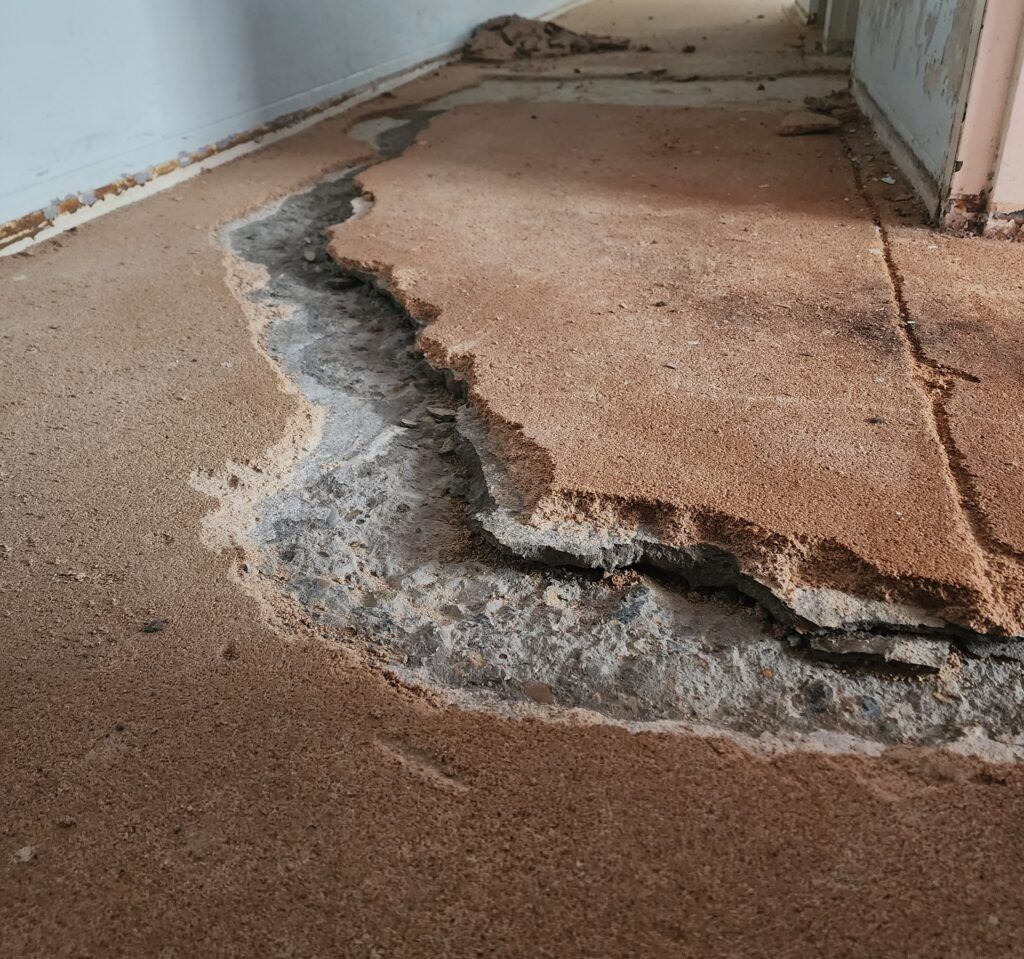
Why Choose Us For Concrete Cancer Repairs
We specialise in professional concrete cancer repairs across Sydney, delivering long-term structural solutions—not cosmetic patch-ups. Every project is assessed, prepared, and repaired using industry-approved methods to ensure durability, compliance, and safety.
What Sets Us Apart
Specialist Concrete Repair Expertise:
We focus on concrete cancer remediation, spalling repairs, and structural concrete restoration.
Correct Repair Methods:
All damaged concrete is removed, reinforcement steel is treated, and repairs are reinstated using compatible repair mortars.
Licensed, Insured & Experienced:
Our team operates to Australian Standards with full insurance for peace of mind.
Durability-Focused Repairs:
Repairs are designed to prevent recurrence, not just cover visible damage.
Residential & Commercial Capability:
From private balconies to large strata buildings, no shortcuts, no fillers.
Clear Quotes & Honest Advice:
Transparent pricing with no hidden repair surprises.
DO YOU NEED HELP WITH A SERVICE?
Fill out the form and our team will contact you!
Our Difference
- Free Quote & Measure For Every Job!
- Combine Multiple Services To Save Money!
- There Is A On-Site Supervisor On Every Job!
- Over 200+ Flawless Reviews & Testimonials!
- Proudly 100% Australian Owned & Operated!
- 100% Licensed & Insured Flooring Specialists!
- Fully Qualified & In-House Trained Specialists!
- 24/7 – 365 Service Available At No Extra Charge!
- We Use Dust Extraction Equipment Free Of Charge!
What Is Concrete Cancer?
Concrete cancer is a form of structural concrete deterioration caused by the corrosion of steel reinforcement embedded within the concrete. When moisture, oxygen, and salts penetrate the concrete and reach the steel, the reinforcement begins to rust and expand. This internal expansion creates pressure that leads to cracking, delamination, and the breaking away of concrete from the surface.
Concrete cancer most commonly affects balconies, slabs, columns, beams, car parks, and exposed concrete structures—particularly in coastal or high-moisture environments such as Sydney and NSW. If left untreated, the corrosion continues internally, weakening the structural integrity of the concrete and increasing repair costs over time.
Early detection and professional repair are essential to stop corrosion, restore structural performance, and prevent further damage.
What Does Concrete Cancer Look Like?
Concrete cancer develops when the steel reinforcement inside a structure starts to rust, causing damage to the surrounding concrete. Spotting the early warning signs can help prevent major structural problems and reduce repair costs.
Cracks and Surface Damage
Look out for cracks, spalling, or areas where the concrete appears to be breaking apart, particularly near edges, corners, or joints. These are common indicators that the steel inside is corroding.
Rust Stains
Reddish-brown or orange streaks on the concrete surface often suggest rust forming within the steel reinforcement, which expands and pushes through the concrete.
Bubbling, Peeling, or Flaking
Lifting or flaking paint and render, especially in isolated patches, may result from rust expanding beneath the surface.
White Powdery Deposits
White, crystalline deposits, known as efflorescence, often form when moisture interacts with salts in the concrete, signalling potential water-related damage.
Damp Spots and Leaks
Unexpected water seepage or damp patches on walls, ceilings, or balconies can point to concrete degradation caused by internal corrosion.
Bulging or Warped Surfaces
In severe cases, the concrete may swell or bulge due to internal pressure from rusting steel, indicating advanced concrete cancer.
What Are The 3 Biggest Factors That Can Cause Concrete Cancer?
Certain conditions increase the likelihood of developing concrete cancer, such as:
Magnesite Flooring: Common in buildings from the 1920s to the 1990s, magnesite can accelerate corrosion and should be professionally removed.
Coastal Locations: Properties near the ocean are more vulnerable due to salt-laden air, which speeds up the corrosion of embedded steel.
Waterproof Membrane Failure: If a waterproof membrane was installed incorrectly. Water will penetrate into the concrete slab, speeding up the process.
The 10 Signs Of Concrete Cancer – How To Identify Concrete Cancer
Luckily, with concrete cancer, the signs are a good deal more obvious than with people. All you have to do is conduct regular inspections so it doesn’t creep up on you! Here are some of the most notorious signs:
1) Rust: Rust marks will appear and are a sign of concrete cancer.
2) Worn Surfaces: Unprotected, porous surfaces lead to water absorption and concrete cancer.
3) Cracked / Fractured Concrete: Cracks provide water access to the steel reinforcement, instigating concrete cancer and fracturing the concrete, enabling further water penetration. Parts of the concrete crumble away.
4) Moisture Stains and Ponding: Inadequate drainage causes water to settle into the concrete, leading to concrete cancer.
5) Failing Control and Expansion Joints: Joints that do not facilitate concrete movement can lead to concrete fracturing and concrete cancer.
6) Inadequate Concrete Cover: Steel reinforcement that is too close to the surface makes it easier for water absorption, resulting in concrete cancer.
7) Rusted Balustrade Fixings: Rust spreads to the embedded concrete, starting the concrete cancer process.
8) Bubbling Paint: Paint that appears to be bubbling, i.e. on soffits, often means concrete cancer is present.
9) Hollow Surfaces: Concrete surfaces that seem hollow usually have concrete cancer.
10) Exposed Steel Reinforcement: concrete cancer causes concrete to break away, exposing the steel reinforcement.
If you look out for these things regularly, notice one of the signs early, and get on top of it, the cost you will pay and damage to your building or structure will be significantly reduced. If you do notice one of these things, you should contact a professional to give a proper diagnosis.
How Much Does Concrete Cancer Repairs Cost Per Litre?
Approximately – $100 Per Litre*
How Much Does Concrete Cancer Repairs Cost Per Litre? Concrete cancer repair costs vary quite a lot from company to company or private contractor to private contractor. Here at Carpet Removal Sydney, we guarantee that we will always be upfront with pricing, with no hidden extras.
On average Concrete Cancer Repairs Costs $100 Per Litre* for jobs that require Concrete Cancer Repairs.
(Although these prices do vary UP and DOWN depending on a large range of factors)
These are the factors that we take into account when quoting:
– How bad the damage is
– How many Litres are required for the Repairs
– The condition of the concrete that requires Repairs
– Access to the site (LIFT or STAIRS? and what LEVEL?)
– How many Square Metres of Concrete Cancer Repairs are required
– What level of power can be provided? (10AMP > 15AMP OR 3PHASE)
– Is any Concrete Preparation required prior to Repairs? (Such as Concrete Grinding)
– Where the Repairs are taking place (Such as residential homes, balconies or commercial properties)
– What services are required (Concrete Cancer Repairs? or Concrete Prep and Concrete Cancer Repairs)?
These prices may vary depending on a large range of factors, though, so please only use this as a general guide.
How Long Does Concrete Cancer Repairs Take?
The duration of a concrete cancer repair project depends on the size, location, and severity of the damage. For most homes and small commercial buildings, repairs can usually be completed within 1 to 5 days. However, large-scale or complex structures—such as high-rise buildings, basements, or marine environments—can take several weeks to fully restore.
Minor Repairs: 1 – 2 Days
Smaller problem areas, like shallow cracks or light surface spalling, are often quick to fix, particularly when access is simple and straightforward.
Moderate Repairs: 3 – 5 Days
When multiple areas or structural features, such as balconies, beams, or overhead slabs, are affected, additional preparation, curing, and recoating time may be required.
Major Repairs: 1 – 4 Weeks or More
Extensive damage that impacts the reinforcement steel or structural integrity of the concrete may require more time for tasks like rebar replacement, concrete restoration, waterproofing, and protective coating applications.
Factors That Influence Repair Time
Several key elements can affect how long concrete cancer repairs take, including:
Extent of Damage
The more severe the corrosion or cracking, the longer the repair process. Deep deterioration or rusted rebar can significantly increase complexity and time.
Site Accessibility
Working in confined spaces, high areas, or restricted access zones often demands extra safety equipment or scaffolding, which can add to the project timeline.
Weather Conditions
External repairs are particularly influenced by the weather. High humidity, rain, or extreme heat can delay curing and coating times.
Chosen Repair Technique
Different repair methods—such as epoxy injection, concrete patching, or full section replacement—each require unique materials, drying times, and procedures.
At Carpet Removal Sydney We Offer Free Concrete Cancer Inspections In Sydney
We undertake a professional investigation with our highly skilled team to identify the source of the problem that is causing concrete cancer damage throughout your property. Identifying the source is vital in reducing the probability of further ongoing concrete cancer. Once the nature of, or cause of, the source is identified, we determine the best possible solution for our clients to repair the concrete cancer damage.
If you suspect concrete cancer in your property, don’t hesitate to CONTACT US NOW FOR A FREE ONSITE INSPECTION. Our experienced team will provide a detailed quote outlining the best methods to treat and permanently repair the issue.
What Is The Difference Between Concrete Cancer And Concrete Spalling?
Although concrete cancer and concrete spalling are often mentioned together, they describe different stages and causes of concrete damage. Knowing the difference allows property owners to detect early warning signs and take timely action to prevent serious structural issues.
Concrete Spalling – This term refers to the visible surface damage that appears when concrete begins to flake, chip, or peel away. It is usually caused by factors such as moisture intrusion, temperature changes, or general wear and tear. Spalling typically shows up as uneven, rough patches, cracked surfaces, or small pieces of concrete breaking off. While it can weaken the material’s integrity over time, it doesn’t necessarily mean the internal steel reinforcement has been compromised.
Concrete Cancer – This is a far more severe problem that develops from within the concrete structure. It starts when water and air reach the embedded steel reinforcement (rebar), causing it to rust. As the steel corrodes, it expands, creating pressure that forces the surrounding concrete to crack and break apart. This internal reaction leads to significant structural deterioration, often identified by deep cracking, rust stains, and sections of concrete that bulge or crumble. In essence, concrete cancer represents the advanced stage of concrete decay and requires professional repair to prevent further damage.
How Do You Determine If My Property Has Concrete Cancer?
Concrete cancer is identified through a combination of visual assessment and targeted inspection. Common indicators include cracking, concrete spalling, rust staining, exposed reinforcement steel, and areas where concrete has begun to delaminate or break away.
During an inspection, we assess the affected areas to determine the extent of deterioration, identify the cause of reinforcement corrosion, and confirm whether concrete cancer is present. In some cases, minor surface cracking may be purely cosmetic, while other areas may indicate more serious structural issues. Our inspection process enables us to distinguish between superficial damage and genuine concrete cancer that requires remediation, ensuring the correct repair approach is applied.
Can Concrete Cancer Be Prevented?
While concrete cancer cannot always be fully prevented, the risk can be significantly reduced through proper design, maintenance, and early intervention. Preventative measures include maintaining effective waterproofing systems, sealing cracks before moisture ingress occurs, ensuring adequate concrete cover over reinforcement, and addressing drainage or water exposure issues promptly.
Early detection and timely repairs are critical. Treating minor cracking or early-stage spalling before corrosion progresses can prevent extensive structural damage and reduce long-term repair costs. Where appropriate, protective coatings, corrosion inhibitors, and ongoing maintenance programs can further extend the service life of concrete structures.
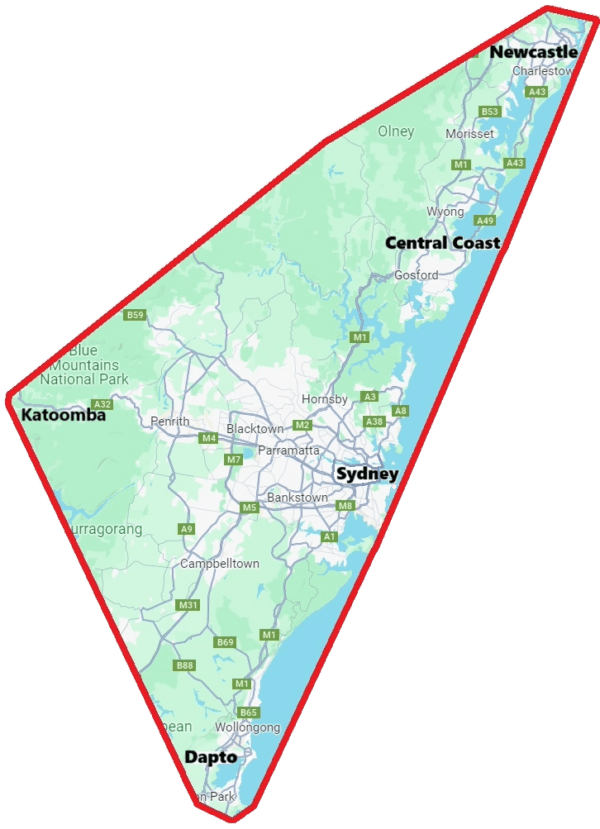
What Areas In Sydney & NSW Do We Service?
Here at Carpet Removal Sydney, we service a large range of areas, including:
– Lower North Shore
– North West & Ryde
– Upper North Shore
– St George
– The Hills Shire
– Inner West
– Northern Beaches
– Eastern Suburbs
– Northern Sydney
– South West Sydney
– Sutherland Shire
– Greater Western Sydney
– Sydney CBD
– Sydney
– Newcastle
– Wollongong
We can take on any job at any time. No matter how big the job is, we’ll take it on!
Click Here To Learn More About The Areas In Sydney & NSW That We Service
Learn EVERYTHING You Need To Know About Concrete Cancer Repairs
We provide more information than any other company or website in the WORLD regarding Concrete Cancer Repairs.
– What Is Concrete Cancer?
– What Is Concrete Spalling?
– How To Repair Concrete Cancer
– Free Concrete Cancer Inspections
– How Does Concrete Cancer Occur
– How Do You Repair Concrete Cancer?
– Is It Safe To Buy A Property With Concrete Cancer?
– How Long Does It Take To Repair Concrete Cancer?
– What Happens If You Don’t Repair Concrete Cancer?
– What Structures Are Most At Risk For Concrete Cancer?
– Why Is It Important To Repair Concrete Cancer As Quickly As Possible?
– What Is The Difference Between Concrete Cancer And Concrete Spalling?


FREE QUOTE CALL OR TEXT
0424 408 330
No Call Out Fee Conditions apply*
GET YOUR JOB BOOKED IN AND FINISHED TODAY !!